
Table of Contents
Life Cycle Funds have turned out to be amongst the most creative investment products designed by SEBI (Securities and Exchange Board of India). Are you finding it difficult to maintain a long-term investment or thinking about ways of rebalancing your portfolio as you approach your financial objectives? Life Cycle Funds may very well be the right option that you were looking for.
In this detailed article, we will learn all that we need to know about Life Cycle Funds, how they operate, the advantages they offer, and why you should be considering them.
What Are Life Cycle Funds?
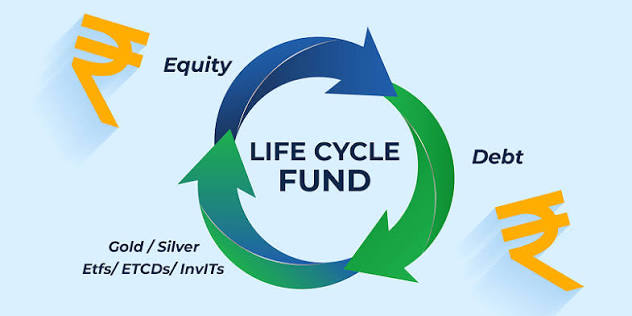
Life Cycle Funds represent a special type of mutual funds that have been developed for purpose-oriented investment strategies. Such funds automatically rebalance their investments in equity, bonds, gold, and silver depending upon the time left until the maturity date of the portfolio.
What distinguishes such funds is clearly reflected by their names; namely, they specify the target year. For instance, “2046 Life Cycle Fund” will be designed for those who will require money by 2046, exactly 20 years after 2026.
The Critical Problem Life Cycle Funds Solve
Rebalancing Challenge
Although financial planners have always encouraged goal-based investing, there exists a large disparity between theory and practice. According to the concept of goal-based investing, as one nears his or her goal, one is supposed to slowly move money from equities to debt in order to safeguard the capital accumulated.
Why does this happen?
- Greed Factor: When markets are rising, investors hesitate to move money from equity to debt, fearing they’ll miss out on further gains
- Fear Factor: When markets fall, panic sets in, and investors withdraw prematurely to avoid further losses
- Lack of Discipline: Even with the best intentions, investors forget to rebalance annually or get too busy with life
- Emotional Decision-Making: Human emotions consistently interfere with rational investment decisions
The Holding Period Problem
Compounding really comes into its own when one stays invested for 10-15 years or even longer. But evidence shows that the average time for which people stay invested in mutual funds is only 2-3 years. This kind of behavior keeps investors from experiencing the full benefits of their investments.
Life Cycle Funds solve this problem by:
- Removing emotional decision-making from the equation
- Automating the rebalancing process
- Aligning investment tenure with specific life goals
How Life Cycle Funds Work: The SEBI Framework
SEBI’s Asset Allocation Framework
SEBI has defined specific allocation bands based on years remaining to maturity:
Note: The equity allocation gradually decreases as the fund approaches maturity, while debt allocation increases to preserve capital and ensure funds are available when needed.
Real-World Application: A Practical Example
Let’s say you have a newborn child in 2026, and you want to invest for their higher education expenses when they turn 20 in 2046.
Traditional Approach Problems:
- You would need to remember to rebalance every year starting from year 15
- Market conditions might trigger emotional decisions
- You might miss the optimal rebalancing windows
- Discipline required for 20 years is exceptionally difficult
Life Cycle Funds Approach:
- Invest in a “2046 Life Cycle Fund”
- The fund automatically maintains 65-90% equity allocation for the first 15 years
- Gradual, systematic shift to debt begins automatically
- By year 19-20, majority is in safe debt instruments
- You receive your money when needed, protected from last-minute market crashes
Key Benefits of Life Cycle Funds
1. Automatic Portfolio Rebalancing
The fund manager handles all rebalancing decisions based on SEBI’s prescribed guidelines, removing the burden from your shoulders.
2. Emotional Decision-Making Eliminated
Since the asset allocation is predetermined and automatic, your emotions don’t interfere with your investment strategy.
3. Goal-Date Alignment
The fund’s maturity date aligns perfectly with your goal, ensuring money is available when you need it.
4. Protection from Market Timing Risks
By gradually shifting to debt over several years, you avoid the risk of a market crash just before you need the money.
5. Simplicity and Convenience
One fund, one investment, automatic management—it doesn’t get simpler than this for long-term goal planning.
6. Professional Management
Expert fund managers handle the allocation decisions within SEBI’s framework, combining regulatory safety with professional expertise.
7. Compounding Benefits
By keeping you invested for the long term, these funds help you harness the true power of compounding.
Who Should Invest in Life Cycle Funds?
Life Cycle Funds are ideal for:
1. Retirement Planning
If you’re planning for retirement in 15, 20, or 30 years, these funds provide a systematic approach to building your retirement corpus while automatically reducing risk as you approach retirement age.
2. Children’s Education
Parents investing for their children’s higher education can select a fund that matures when their child reaches college age.
3. Long-Term Financial Goals
Any specific goal with a defined timeline—buying a house, starting a business, or planning for a major life event.
4. Busy Professionals
Individuals who don’t have time to actively manage and rebalance their portfolios annually.
5. First-Time Investors
Those new to investing who want a simple, automated solution that doesn’t require constant monitoring.
6. Risk-Averse Investors
People who understand the need for equity exposure but are concerned about managing risk as they approach their goals.
Current Status and Future Outlook
As of now, two Life Cycle Funds have been launched:
- One maturing in 2036
- Another maturing in 2041
More funds with various maturity dates are expected to be launched, providing investors with options for different goal timelines—5, 10, 15, 20, and 30-year horizons.
Important Considerations
1. Choose the Right Maturity Date
Ensure the fund’s maturity date aligns closely with when you’ll need the money. Don’t select a 2046 fund if you need the money in 2040.
2. Understand You Can’t Change the Timeline
Unlike traditional mutual funds, you can’t simply postpone your withdrawal if the market is unfavorable. Plan accordingly.
3. Stay Invested Until Maturity
While you can redeem earlier, doing so defeats the purpose of the automatic rebalancing feature.
4. Compare Different Fund Houses
Once multiple funds are available for the same maturity year, compare their performance, expense ratios, and fund manager track records.
5. This Isn’t for Emergency Funds
Life Cycle Funds are designed for specific long-term goals, not for money you might need in an emergency.
Life Cycle Funds vs. Traditional Goal-Based Investing
Key Insight: Life Cycle Funds eliminate most of the challenges associated with traditional goal-based investing through automation and systematic approach.
Why SEBI’s Initiative Is Groundbreaking
This category represents SEBI’s understanding of investor behavior and the practical challenges of maintaining long-term investments. By creating a regulatory framework that:
- Protects investors from themselves (emotional decisions)
- Simplifies complex strategies (automatic rebalancing)
- Ensures goal achievement (time-based allocation)
- Promotes long-term investing (built-in holding period)
SEBI has created a win-win situation for both investors and the mutual fund industry.
Implementation Strategy: Getting Started
Step 1: Identify Your Goal
Be specific—retirement at 60, child’s education in 2045, down payment for a house in 2038.
Step 2: Select the Appropriate Fund
Choose a Life Cycle Fund whose maturity date matches your goal timeline.
Step 3: Determine Investment Amount
Calculate how much you need to invest (lump sum or SIP) to reach your goal, considering expected returns.
Step 4: Start Your Investment
Begin your SIP or make your lump sum investment based on your financial capacity.
Step 5: Monitor (But Don’t Meddle)
Review your investment annually, but resist the urge to exit prematurely or switch funds.
Step 6: Trust the Process
Let the automatic rebalancing do its job as you approach your goal date.
Common Mistakes to Avoid
- Choosing the Wrong Maturity Date: Don’t pick a fund based on current performance; pick based on your goal timeline
- Exiting Too Early: Premature withdrawal defeats the entire purpose
- Trying to Time the Market: The fund does this for you; don’t second-guess the strategy
- Not Investing Enough: Calculate properly to ensure you reach your goal
- Ignoring Expense Ratios: Compare costs across similar funds
The Magic of Staying Invested
The real wealth creation happens when you stay invested for 10-15 years or more. Here’s why Life Cycle Funds excel at this:
Year 1-5: Your money grows primarily through market returns
Year 6-10: Compounding begins to show its power
Year 11-15: Exponential growth while maintaining high equity exposure
Year 16+: Wealth preservation kicks in automatically, protecting your gains
Without a structured product like Life Cycle Funds, most investors exit somewhere between years 2-5, missing the exponential growth phase entirely.
Conclusion: A Category Worth Watching
Life Cycle Funds are among the best innovations that have happened in the Indian mutual fund industry in recent years. Life Cycle Funds address many investor problems at once through their use of goal-oriented investments and rebalancing within SEBI’s safeguarding environment.
If you’re investing for:
- Your retirement
- Your children’s education
- Any long-term financial goal with a specific timeline
Then Life Cycle Funds should definitely be on your radar.
With more such funds being launched in this sector with different maturities, there will be more choices to choose according to your individual objectives. The feature of automatic balancing makes sure that you do not lack money on account of a market crash occurring at the eleventh hour—a need especially true for non-negotiable objectives such as education and retirement.
Wealth creation is all about selecting the right investments and then investing in them for a long period of time. Life Cycle Funds make it easy for you to do both.